
Article published on 30 September 2026
A practical guide to managing inspections, equipment, surfacing and maintenance over time
Playground maintenance involves much more than repairing damaged equipment. It is a planned activity covering play equipment, sports facilities, surfacing, site furniture, vegetation and signage, with the aim of preserving over time the safety and functional conditions established during the design stage.
For local authorities, schools, accommodation providers, campsites and operators of public spaces, properly organising inspections makes it possible to identify wear and tear, loose components, damage caused by use, the effects of bad weather and potential acts of vandalism at an early stage.
EN 1176-7 provides recommendations concerning the installation, inspection, maintenance and management of playground equipment and surfaces. However, actual inspection frequencies must be determined based on the manufacturer’s instructions, intensity of use, the context and the specific characteristics of each site.
Visual inspection, functional inspection and annual inspection
An effective maintenance programme distinguishes between inspections according to their purpose and level of detail.
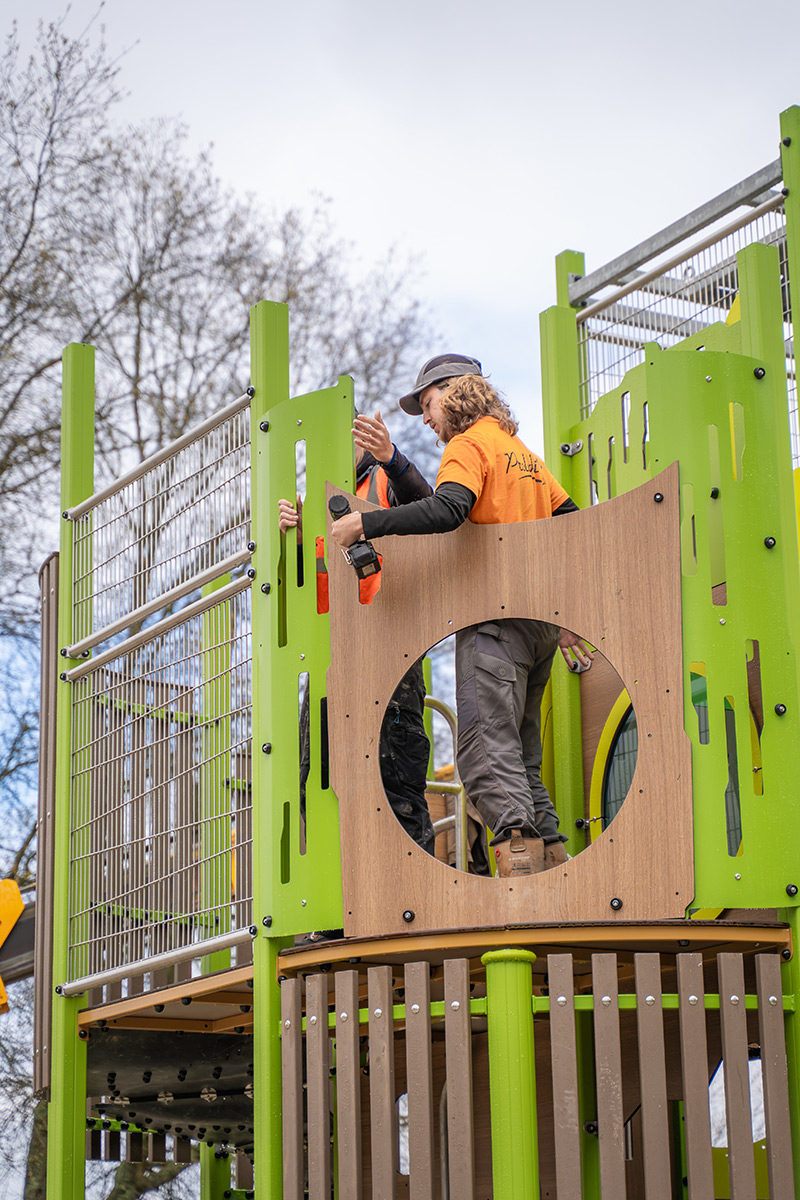
The routine visual inspection makes it possible to quickly identify abnormal situations. During this inspection, particular attention is paid to broken or missing parts, loose fixings, missing protective caps, litter, foreign objects, signs of vandalism and damage caused by specific weather conditions.
The frequency of this inspection depends on how heavily the playground is used. In a busy urban park, it may be necessary to carry it out more frequently.
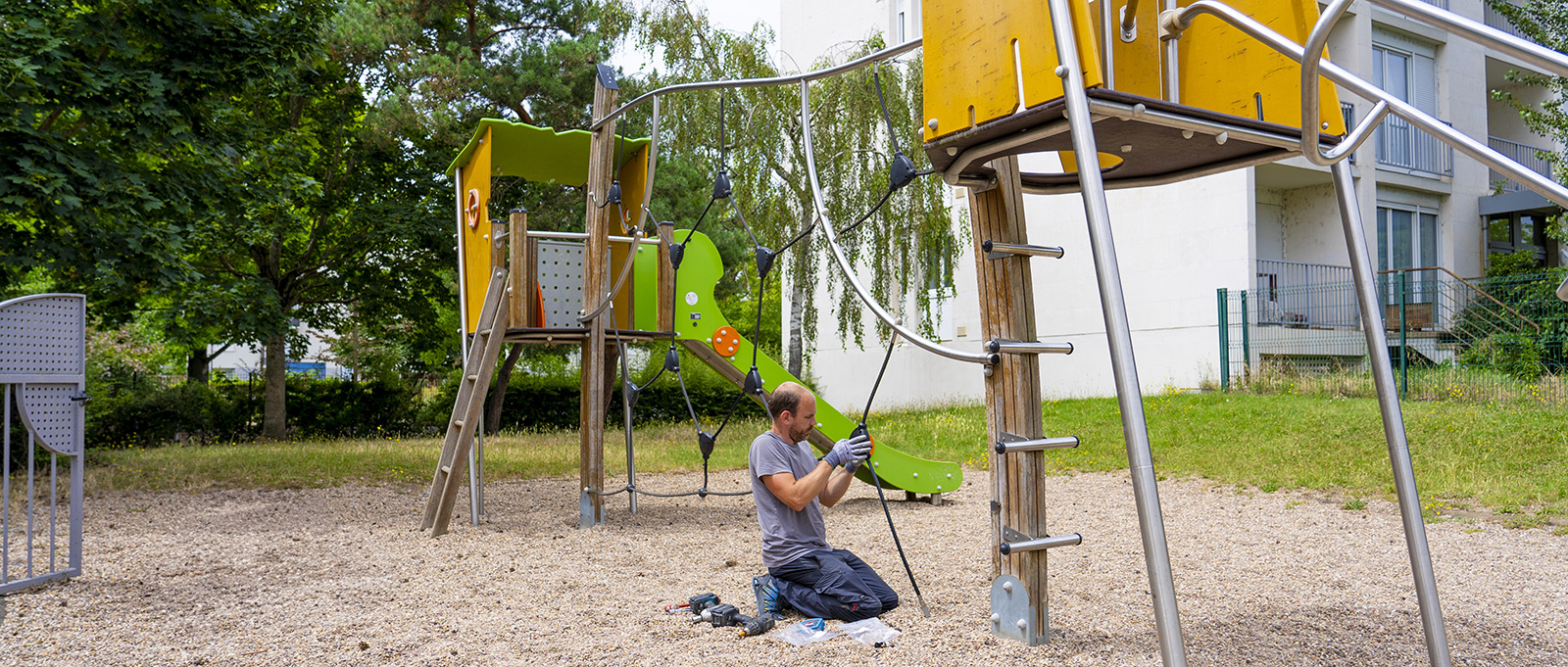
The functional inspection provides a more detailed check of the proper operation of the equipment. It includes checking fixings, stability and the condition of components subject to wear, such as platforms, bars, chains, cables, hand grips, ropes and moving parts.
This stage makes it possible to identify issues that may be difficult to detect during a simple inspection. A component may appear intact while still requiring adjustment, tightening or replacement due to wear.
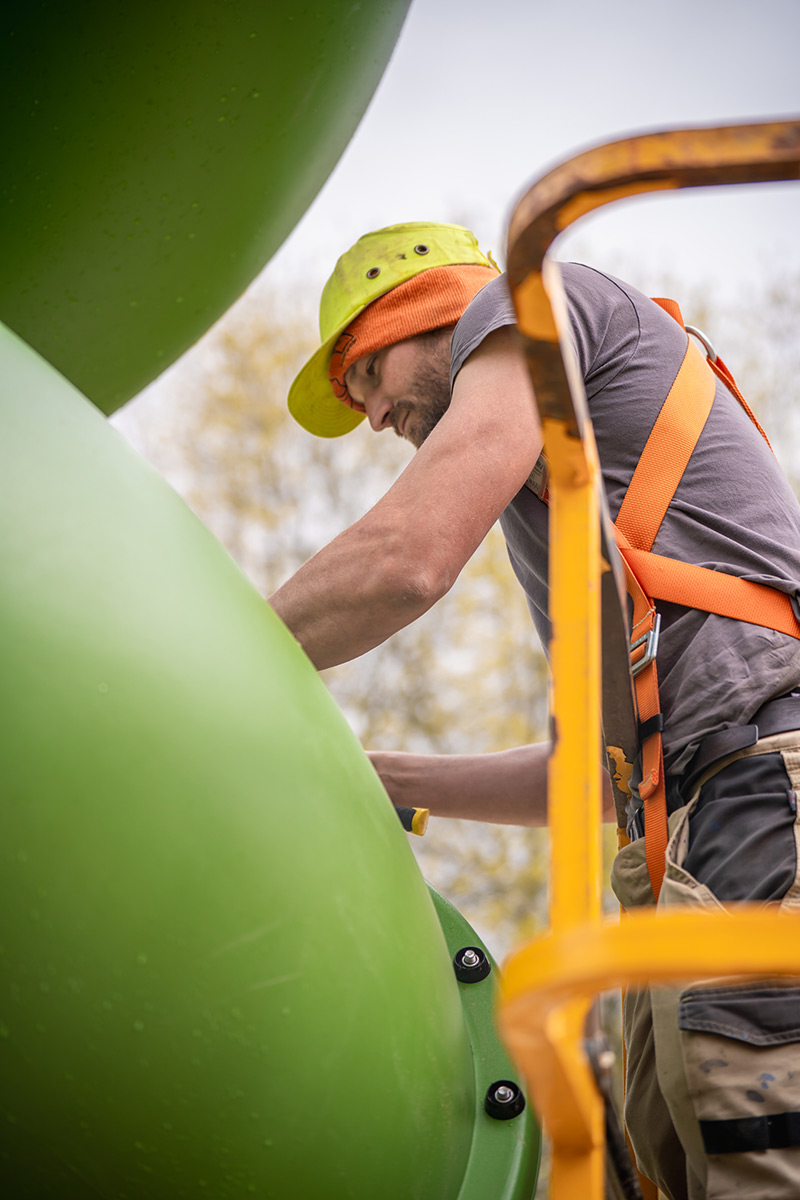
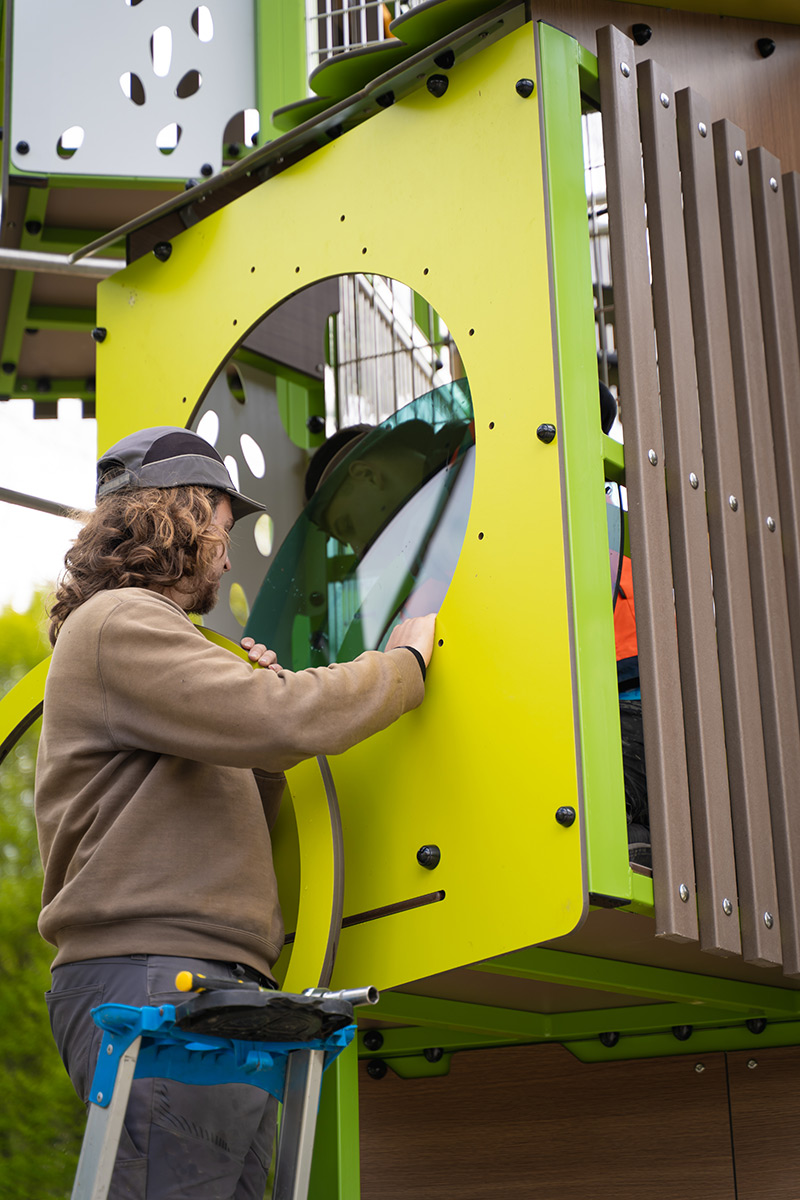
The main annual inspection provides an overall assessment of the playground. Anchoring systems, the supporting structure, posts, panels, connections, surfaces and the general condition of the equipment are examined. This inspection also makes it possible to assess the effects of wear, corrosion, weather exposure and intensive use over time.
The Proludic Maintenance Guide organises these inspections on a monthly, quarterly and annual basis and, for certain components, every two years. Recommendations vary depending on the product family and should be adapted to the actual conditions of the playground.
Inspection frequency depends on the context
A standard schedule provides a starting point, but the actual programme must take into account how the playground is used and the conditions in which it operates.
A park located in the centre of a city and visited daily by many families requires a different level of monitoring from a playground installed in a hotel garden, a seasonal campsite or a school courtyard.
Factors to consider include the number of users, age groups, type of equipment, the presence of moving parts, exposure to weather conditions and the time of year when the space is used most frequently.
The geographical location also plays a role in maintenance. Playgrounds exposed to salt spray, significant temperature variations, frequent rainfall or extensive vegetation may require specific inspections and maintenance measures.
Storms, strong winds, nearby construction work or acts of vandalism may also justify an additional inspection. The maintenance programme therefore becomes a flexible tool that can adapt to the specific conditions of each site.
Each piece of equipment requires specific inspections
Inspection methods vary according to the technical characteristics and conditions of use of the equipment.
An effective maintenance plan should therefore be based on the equipment actually installed on the site, with inspection sheets and frequencies adapted to each type of equipment.
Maintenance covers the entire playground, not just the play equipment
The safety of a play area also depends on the elements surrounding the equipment.
Maintenance starts with installation
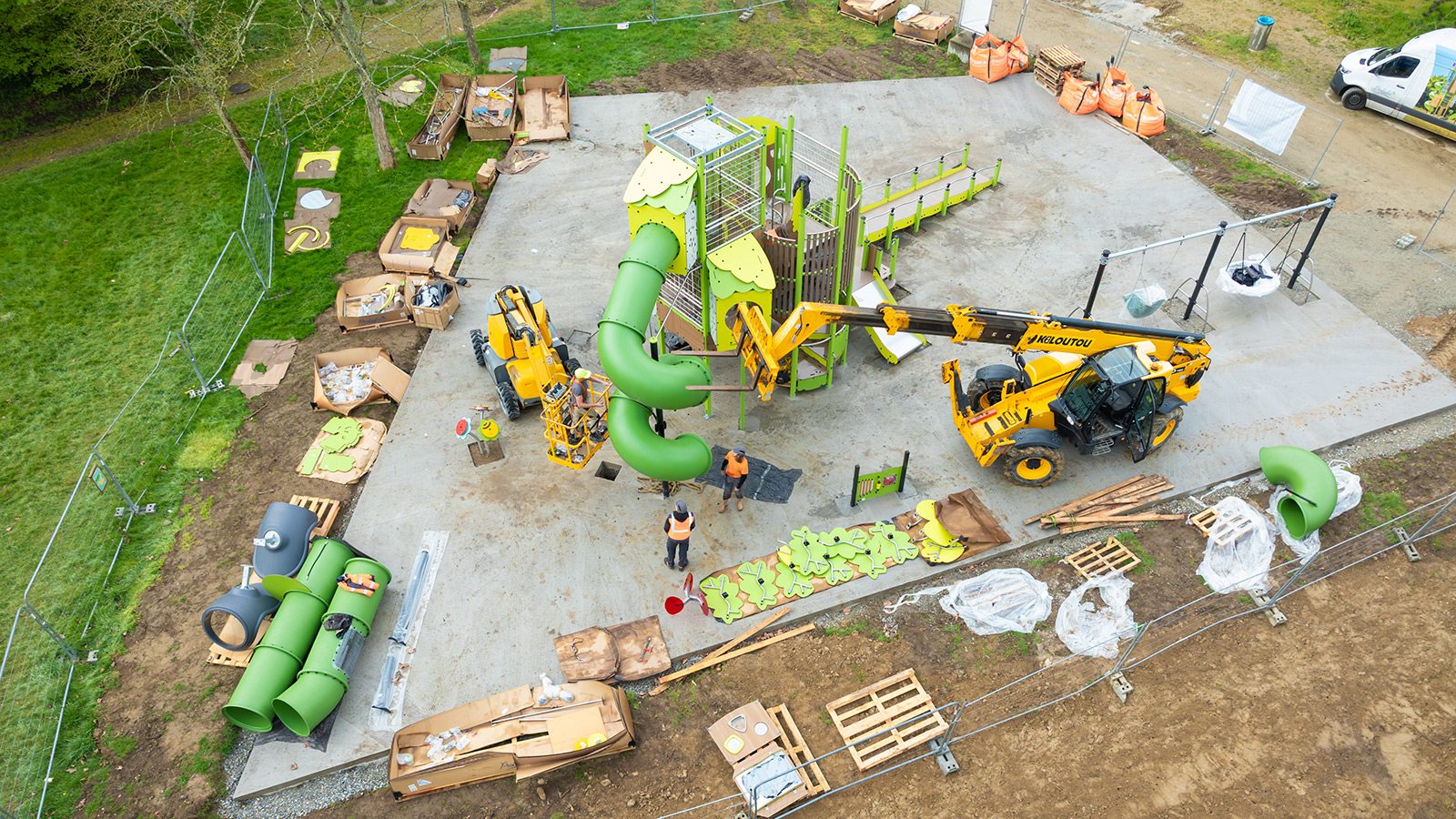
Proper management starts with installation.
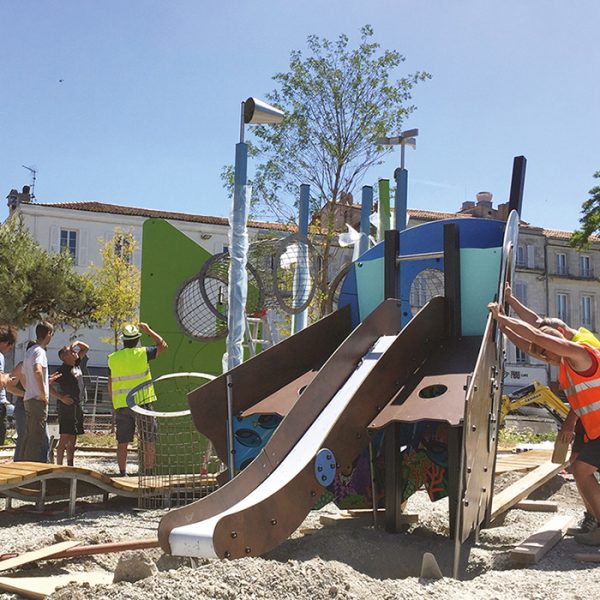
Dimensions, safety distances, foundations, anchoring systems and fixings must comply with the manufacturer’s technical instructions. Correct installation reduces the risk of problems and makes subsequent inspections easier to plan.
Installation instructions also make it possible to identify equipment, assemblies and components through precise reference codes. This traceability makes it easier to find the appropriate spare part and ensures that maintenance work is carried out in accordance with the product’s original configuration.
Keeping the documentation provided at the end of the installation is therefore essential throughout the playground’s service life.
The operator’s file
Continuity in maintenance also depends on good organisation.
For each playground, it is recommended to maintain a file containing the project documentation, site plan, equipment technical data sheets, installation instructions, certificates of conformity, manufacturer’s recommendations and inspection programme.
The same file can also contain inspection reports, repair records, documents relating to component replacement and any incident reports.
The file makes it possible to trace the history of the playground and monitor the condition of each piece of equipment over time. It also facilitates the transfer of information between technical departments, operators, maintenance teams and those responsible for inspections.
EN 1176-7 recommends that operators establish a specific programme for each playground, taking into account the manufacturer’s instructions and local conditions of use. The Proludic Guide presents the operator’s file as a central tool for making maintenance more rational, effective and well documented.
Repairs and spare parts
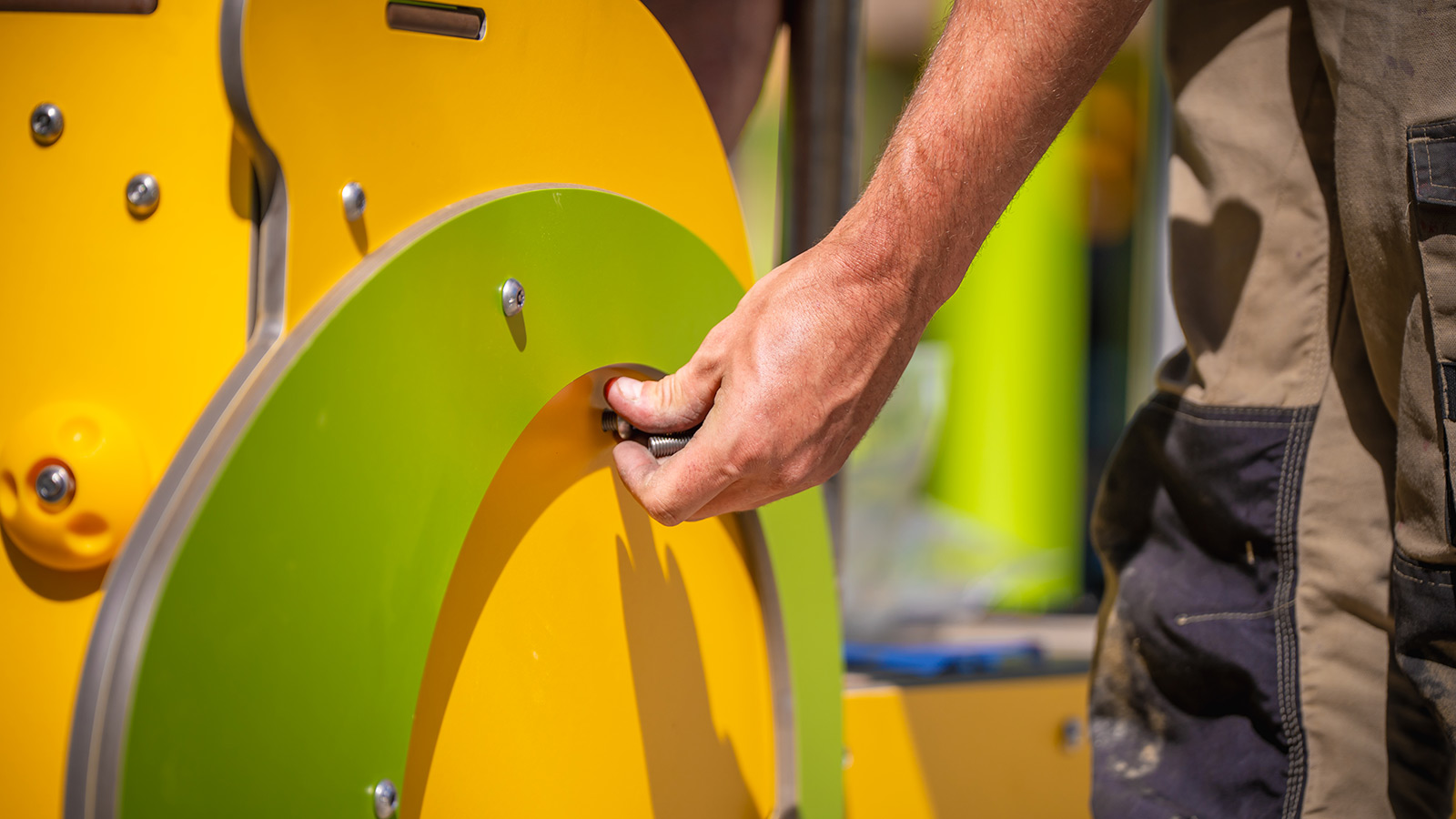
When an inspection identifies a worn or damaged component, the intervention should restore the equipment to the conditions specified for it.
The availability of identification references makes it possible to order the appropriate spare part while preserving its compatibility, dimensions and performance. This is particularly important for components subject to wear, such as chains, ropes, hand grips, bearings, seats and moving parts.
Maintenance work may include tightening fixings, adjusting a mechanism, replacing a rope, restoring a panel, maintaining a surface or replenishing impact-absorbing material.
When part of the equipment requires maintenance, access to it should be managed appropriately until the work has been completed. Recording the work carried out then makes it possible to update the file and plan subsequent inspec
Proludic maintenance service
Proludic also supports operators after the design and installation of the playground.
The maintenance service can be organised according to the equipment installed, level of use and site characteristics. Technicians carry out inspections, identify the necessary maintenance work and manage component replacement.
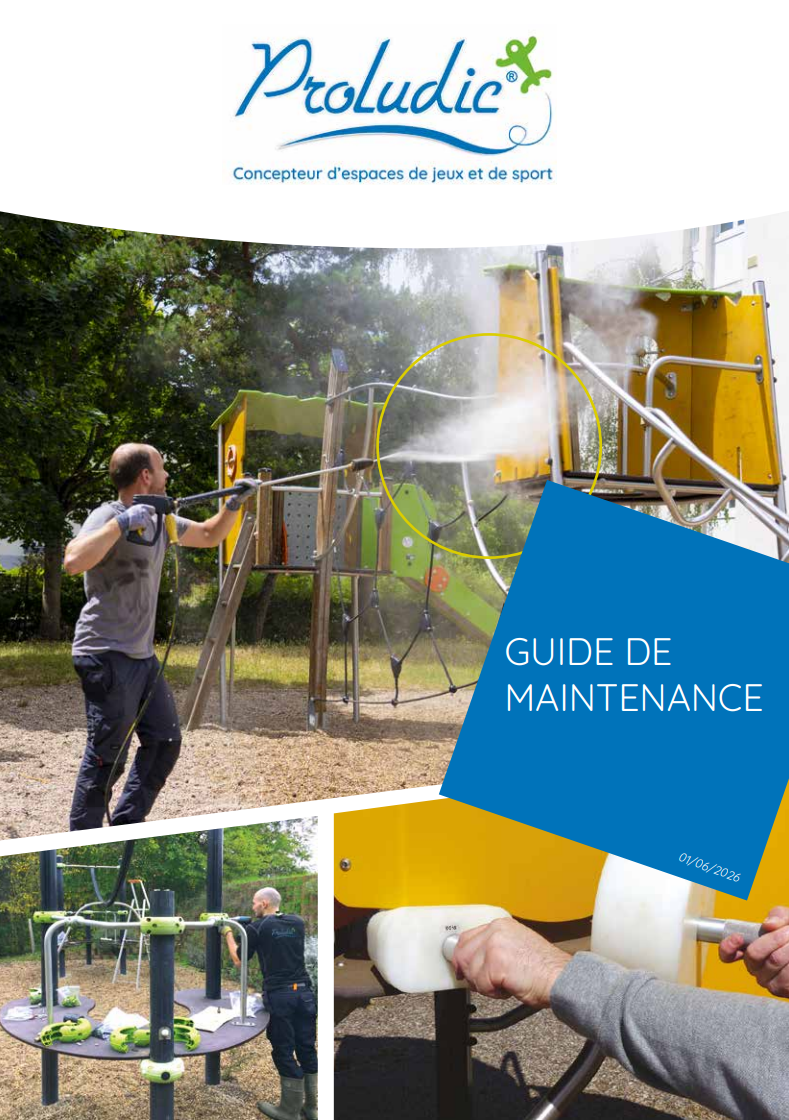
The Proludic Maintenance Guide provides specific recommendations for multiplay equipment, swings, slides, rope structures, dynamic equipment, multisport facilities, fitness stations, surfacing and site furniture. This makes it possible to associate each product with inspection procedures and frequencies adapted to its characteristics.
A structured programme helps preserve the value of the investment, plan resources and keep the playground in good condition over time. Maintenance thus becomes an integral part of the project, from the initial installation through to the day-to-day management of the space.
Organise the maintenance of your playground
The Proludic team can support local authorities, schools, accommodation providers and operators in defining inspection programmes, maintaining equipment and replacing components.
Contact Proludic to define a maintenance programme tailored to the specific characteristics of your playground or sports area.
More Tips from Experts
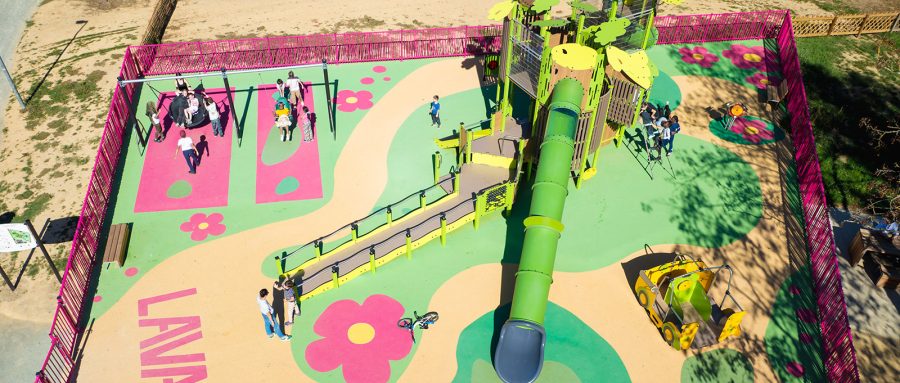
How to Design Innovative Outlook Playgrounds
Article published on 1 October 2026
Outdoor playgrounds represent a major challenge for local authorities and designers, who must create spaces that do more than simply provide entertainment. They should also support the psychomotor development of younger users and, more broadly, benefit users of all ages. Innovation in the outdoor play sector has led to a fundamental rethink of design approaches,...
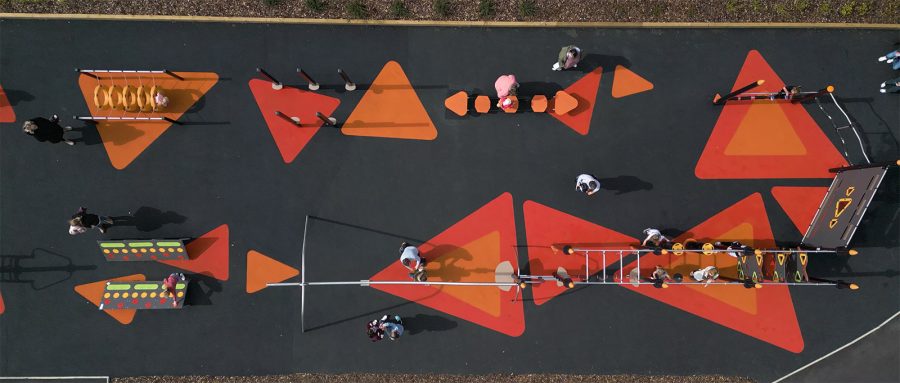
Playground Safety: When Can a Playground Be Considered Safe?
Article published on 1 October 2026
A playground must meet certain requirements relating to manufacturing, design, maintenance, management and signage in order to ensure user safety. The European standard governing playground design allows a certain degree of freedom in equipment design in order to preserve its playful and educational nature. Indeed, children need to experience controlled risks, learn to explore and...


