
Article published on 1 October 2026
Choosing the right impact-absorbing surface is an essential step in the design of playgrounds. The design of impact-absorbing surfaces is one of the key aspects addressed by regulations governing the safety of public playgrounds. It is not simply a matter of aesthetics, but also one of responsibility for user safety.
Types of impact-absorbing surfacing for public playgrounds
Playground surfaces fall mainly into two categories:
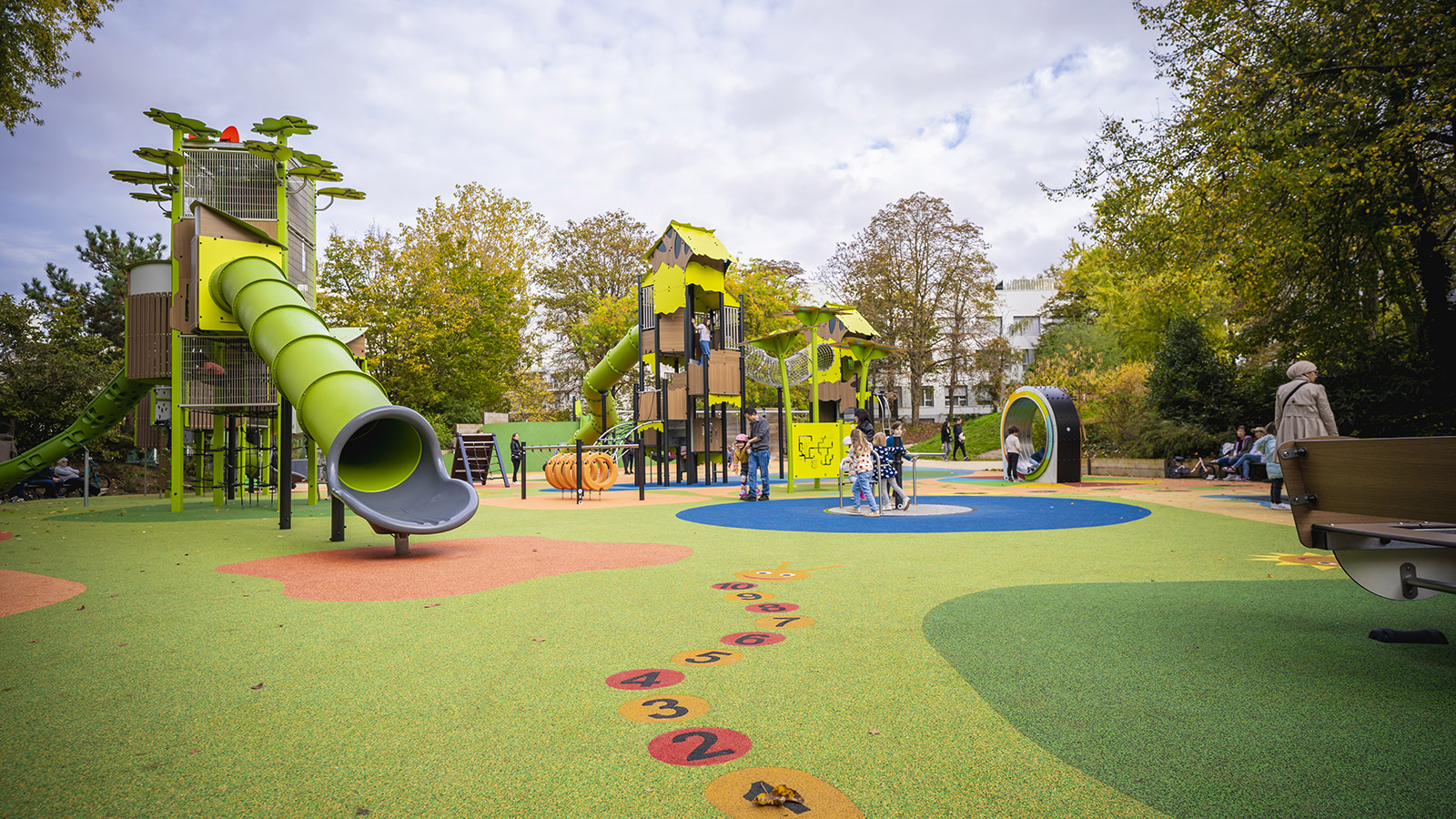
- Synthetic materials (artificial turf, poured-in-place rubber and cellular paving systems), which are the most commonly used solution for accessible playgrounds. They generally provide a flat, firm surface, which is essential for wheelchair and pushchair access. They therefore help remove accessibility barriers and enable every child to reach play equipment independently and safely.
- Natural materials (sand, gravel, bark and grass), which have lower initial costs but require regular maintenance to maintain the minimum depth required by regulations and prevent compaction
Synthetic surfacing: advantages and disadvantages
Synthetic surfacing is now one of the most widely used solutions for public playgrounds, thanks to its seamless finish, ease of maintenance and ability to provide a high level of accessibility and safety.
The most common options include poured-in-place rubber and artificial turf with an impact-absorbing underlay, each offering different technical characteristics and design possibilities.
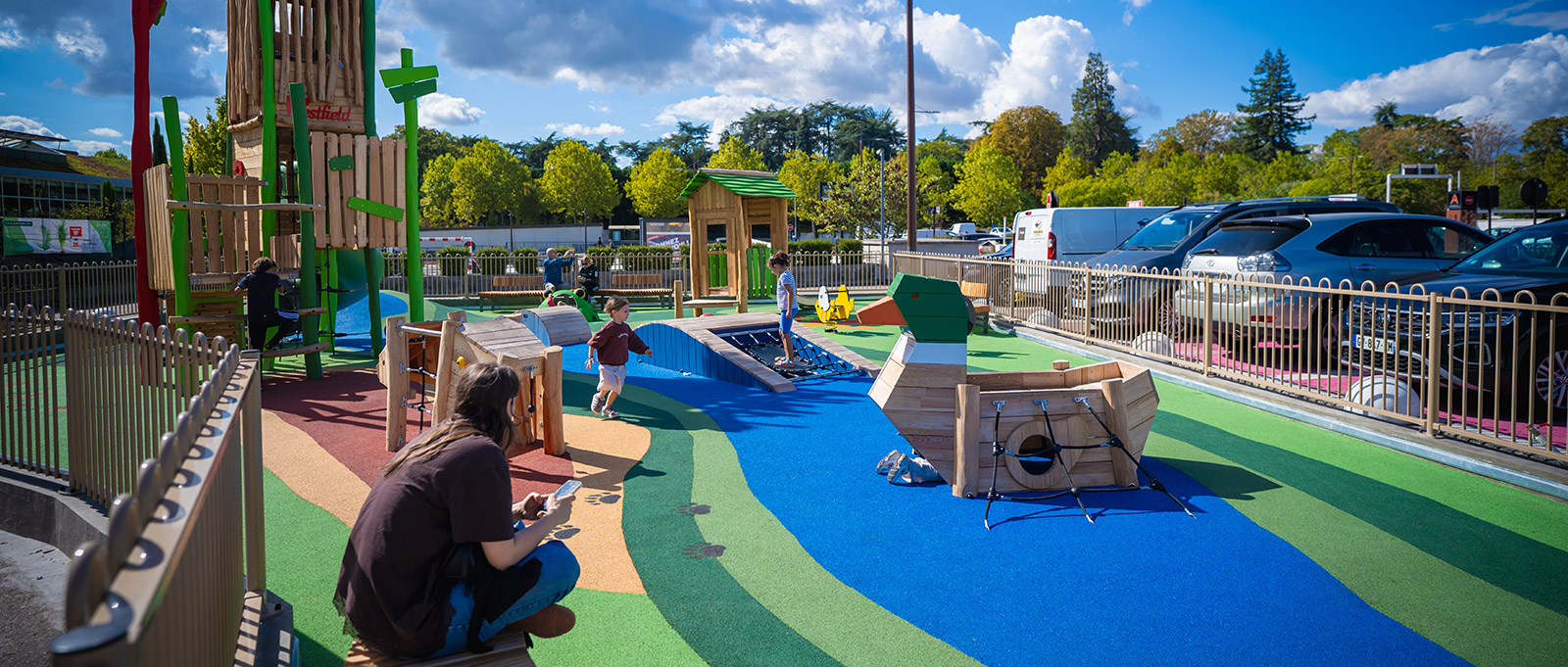
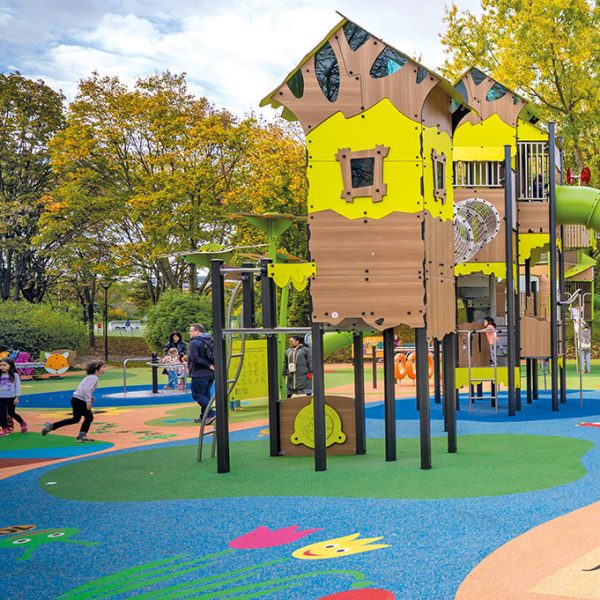
Poured-in-place rubber for playgrounds is often considered a premium solution. It creates a continuous, joint-free surface installed directly on site. This system offers considerable design freedom, allowing surface colours and patterns to be customised.
Its main advantages include:
- No joints, thereby reducing the risk of tripping.
- Strong integration with the playground’s overall design.
- Good resistance to wear and vandalism.
Factors to consider include:
- The need for installation by specialist professionals.
- The requirement for a suitable base.
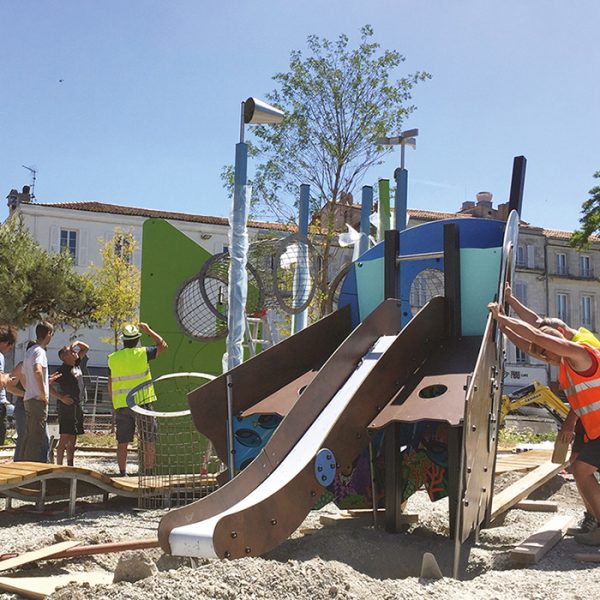
- Installation depends on favourable weather conditions during the construction phase.
Rubber tiles, meanwhile, provide a modular solution that is quicker and easier to install. They are particularly suitable for maintenance and renovation projects, as damaged modules can be replaced individually without having to intervene on the entire surface.
Over time, however, joints between tiles may require regular inspection to prevent lifting or the accumulation of dirt.
Another synthetic surface used in playgrounds is artificial turf with a shock pad. This solution is becoming increasingly popular thanks to its natural appearance, the wide range of shapes and colours available, and its ability to blend into the surrounding landscape. To ensure safety in fall zones, artificial turf must be installed over an impact-absorbing layer certified as compliant with EN 1177.
Comparison of synthetic impact-absorbing surfaces
| Feature | Poured-in-place rubber (SBR + EPDM) | Artificial grass with shock pad |
| Installation | Installed directly on site by specialist personnel, with a suitable base | Synthetic surface installed over a shock-attenuating underlay |
| Surface | Continuous, joint-free | Continuous surface with a natural appearance |
| Aesthetics and design | Extensive customisation: colours, shapes and patterns | Natural appearance resembling grass |
| Project integration | Can accommodate complex playground shapes and layouts | Blends well into the landscape |
| Inclusion and accessibility | Very easy circulation for wheelchairs and pushchairs | Good accessibility |
| Maintenance | Surface cleaning and regular inspections | Regular brushing and cleaning |
| Repairs | Possible through localised repairs | Individual sections of surfacing can be replaced |
| Durability | Very good with appropriate installation and maintenance | Good |
| Vandalism resistance | High thanks to the continuous surface | Moderate |
Natural Playground Surfacing: Advantages and Disadvantages
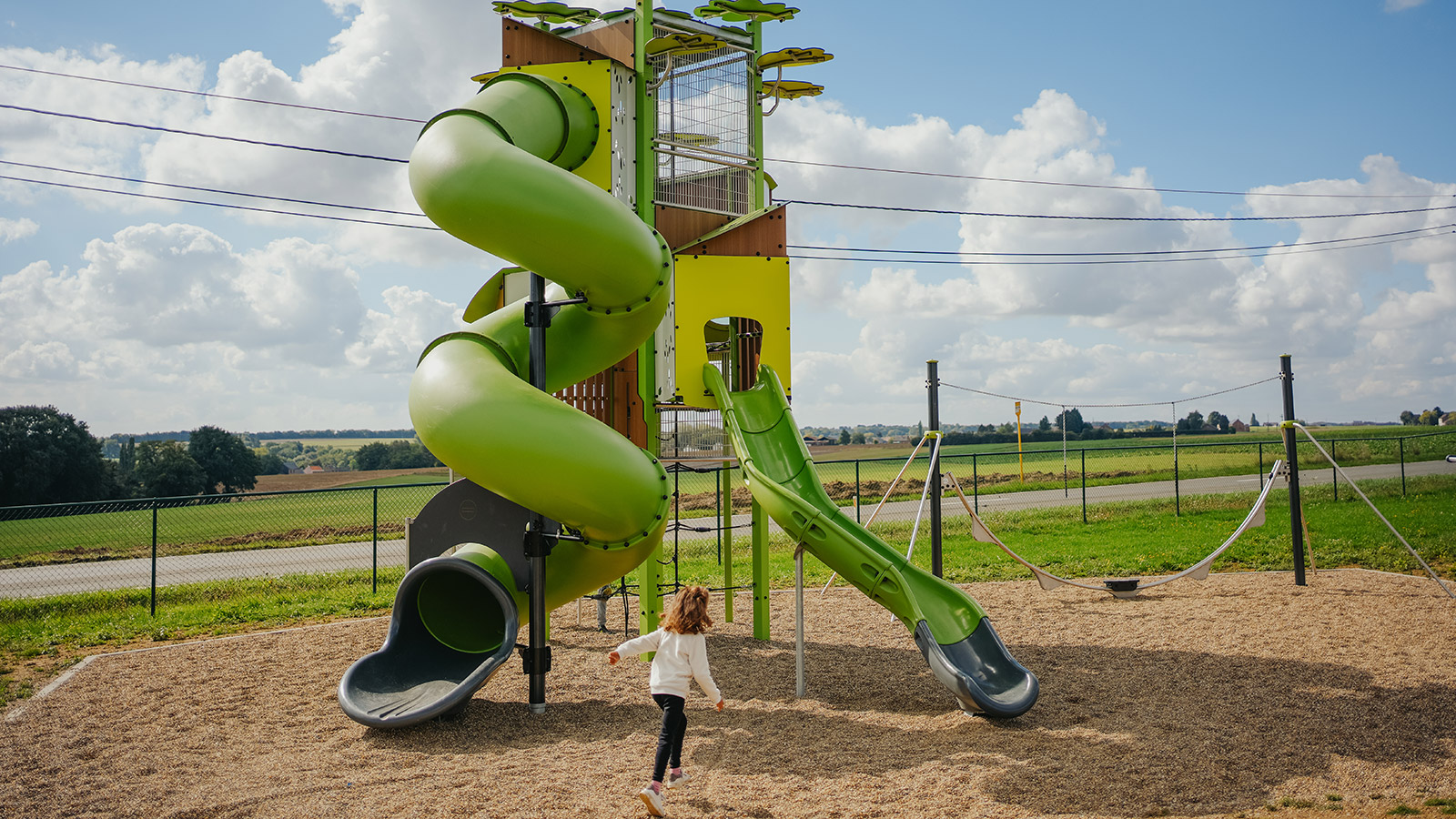
Alongside synthetic surfaces, natural surfacing materials are widely used in playground design, particularly in landscaped settings and large green spaces. Materials such as sand, rounded gravel (rounded pebbles), bark, wood chips and natural grass can be used to create safety surfaces that blend harmoniously with their surroundings.
These solutions are particularly popular in projects that prioritise sustainability, soil permeability and landscape integration. Their natural appearance helps create more organic play spaces that are in keeping with their environment.
Like all impact-absorbing surfaces, natural materials must also meet the requirements of EN 1177, which specifies the impact-attenuation performance required in relation to the fall height of play equipment. To maintain safety over time, it is essential to ensure that the material remains at a sufficient depth, inspect it regularly and replenish it whenever necessary.
Comparison of the main natural impact-absorbing surfaces
| Feature | Sand | Rounded gravel | Pine bark | Natural grass |
| Installation | Spread over a drainage layer | Spread over a drainage base | Spread over a drainage base | Grass seeding or turf laying |
| Aesthetic appearance | Natural and bright | Natural and mineral | Natural and organic | Fully integrated into the landscape |
| Landscape integration | Good | Very good | Very good | Excellent |
| Accessibility | Limited for wheelchair users | Limited | Limited | Good when properly maintained |
| Maintenance | Periodic adjustment of material depth | Periodic adjustment of material depth | Natural decomposition over time | Mowing and watering |
| Durability | Good with appropriate maintenance | Very good | Moderate | Variable |
| Environmental sustainability | Natural material | Natural material | Natural material | Entirely natural solution |
When designing a playground, the choice between natural and synthetic surfacing depends on several factors: equipment fall height, playground usage intensity, landscaping objectives and the level of maintenance planned over time.
Critical fall height (CFH) and regulatory requirements
Playground safety is governed by a set of European technical standards that provide a reference framework for the design of public playgrounds.
Public playground safety is primarily governed by European standards EN 1176 and EN 1177, which respectively define the requirements for play equipment and impact-absorbing surfacing. These standards provide a technical reference for the design of public playgrounds and the assessment of safety in fall zones.
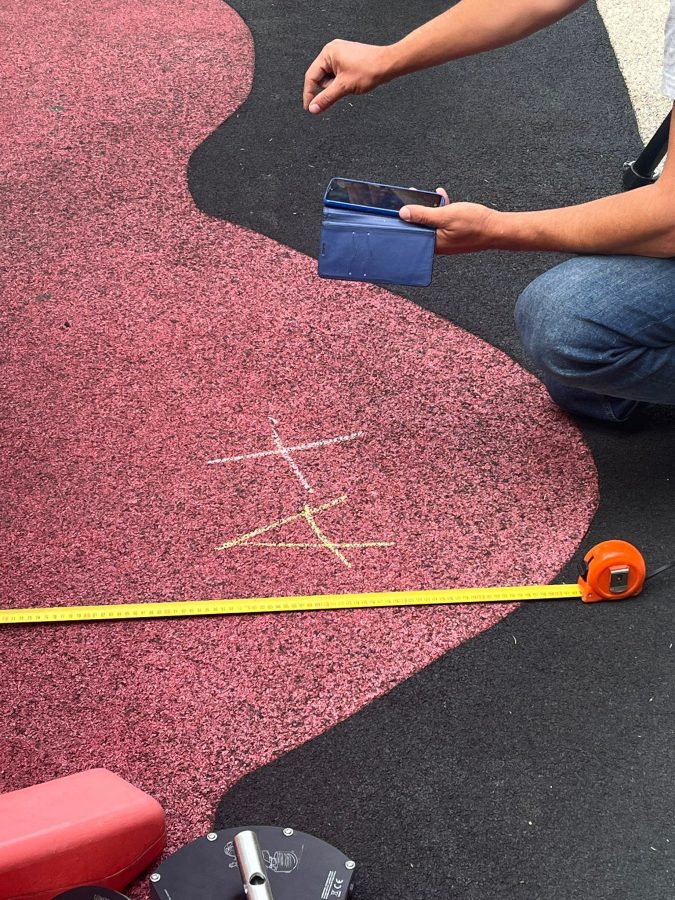
At the heart of impact protection is EN 1177, which defines the critical fall height (CFH), meaning the maximum fall height at which a surface can absorb impact sufficiently to help prevent life-threatening head injuries.
Each piece of play equipment has its own free height of fall (HFL), specified by the manufacturer. This value directly determines the thickness and type of impact-absorbing surfacing required beneath the equipment.
The impact-absorbing surface must therefore be designed according to this value: the greater the equipment’s HFL, the thicker the rubber or other chosen material will need to be.
It is also essential that post-installation testing verifies, using specialised impact-testing equipment, that the measured CFH values correspond to those specified during the design stage.
Playground surfacing: maintenance and service life
A common mistake is to treat surfacing as something that can simply be “installed and forgotten”. SBR and EPDM rubber surfaces are exposed to weather conditions and UV radiation, which can cause the material to harden and reduce its impact-absorption capacity.
Natural surfaces also require regular checks of their depth and material condition, particularly in areas exposed to intensive use. The choice of surfacing materials should therefore always be assessed in relation to the type of equipment installed and the expected level of playground use.
To achieve a service life of 10 to 15 years, regular cleaning is necessary to prevent debris and sand from acting as abrasives, or moss and fallen leaves from making the surface slippery. Annual inspections should include elasticity tests, particularly in areas subject to the highest levels of impact, such as the exit of slides or the area beneath swing seats, where wear occurs more quickly.
Costs and Quotations
The cost of impact-absorbing playground surfacing varies considerably depending on the technology selected and the thickness required. On average, poured-in-place rubber is more expensive per square metre than tiles, but it offers a longer service life and generally lower costs for occasional repairs.
For local authorities, it is essential to consider not only supply and installation costs, but also the costs associated with the base — generally reinforced concrete, although alternatives such as asphalt, permeable concrete or HDPE cellular structures filled with aggregates may also be used — as well as the final inspection. A higher initial investment in quality materials almost always translates into savings in the medium and long term by reducing remedial work and maintenance interventions.
Impact-absorbing surfacing is just one of the essential elements to consider when ensuring playground safety.
Frequently Asked Questions (FAQ) About Playground Impact-Attenuating Surfacing
Under standard EN 1176, impact-absorbing surfacing is required in all public playgrounds where the equipment’s free fall height exceeds 60 cm, as well as, in all cases, beneath equipment involving forced movement, such as swings, roundabouts and spring-mounted play equipment, regardless of their height. The surface must comply with UNI EN 1177 throughout the equipment’s impact area. For local authorities, schools and private operators, compliance is their direct responsibility in the event of an accident.
There is no single standard thickness: it must be determined according to the free height of fall of the equipment. Under EN 1177, the critical fall height of the surface must be equal to or greater than the equipment’s free height of fall.
As a general indication, a poured rubber surface approximately 40 mm thick may provide protection for falls of around 1.3 to 1.5 m, while equipment with fall heights of 2.5 to 3 m requires greater thicknesses and more substantial layered systems. The actual performance must always be verified through instrumental testing after installation.
The choice depends on the intended use and the setting.
Poured-in-place rubber creates a continuous, joint-free surface. It offers excellent accessibility for wheelchairs and pushchairs, good resistance to vandalism and considerable design flexibility. These characteristics make it particularly suitable for busy public spaces and inclusive playground projects.
Tiles are quicker to install and can be replaced individually, making them suitable for refurbishment projects.
Sand, bark and grass are less expensive and blend naturally into the landscape, but they can restrict accessibility and require regular maintenance to maintain the minimum depth needed for safety.
The base depends on the type of surfacing selected.
Poured-in-place rubber is generally installed over a concrete slab or asphalt base, with a level surface and appropriate gradients to allow water to drain away.
Impact-absorbing artificial turf can be installed over a stabilised and compacted granular base that is level and well drained. The impact-absorbing underlay is laid first, followed by the synthetic turf.
For gravel and bark, a containment system is created over a level, well-drained base, which may be separated from the underlying ground by a geotextile membrane. The loose material is then spread to the required depth.
The thickness of the surfacing and the composition of the different layers must always be determined according to the fall height of the equipment and the performance requirements set out in EN 1177.
Proper integration of play equipment, safety surfacing and the overall site layout is essential to ensure regulatory compliance and the long-term durability of the project.
More Tips from Experts
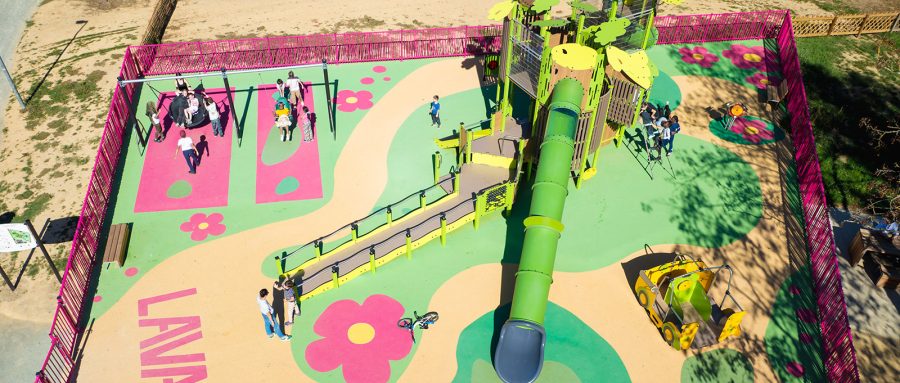
How to Design Innovative Outlook Playgrounds
Article published on 1 October 2026
Outdoor playgrounds represent a major challenge for local authorities and designers, who must create spaces that do more than simply provide entertainment. They should also support the psychomotor development of younger users and, more broadly, benefit users of all ages. Innovation in the outdoor play sector has led to a fundamental rethink of design approaches,...
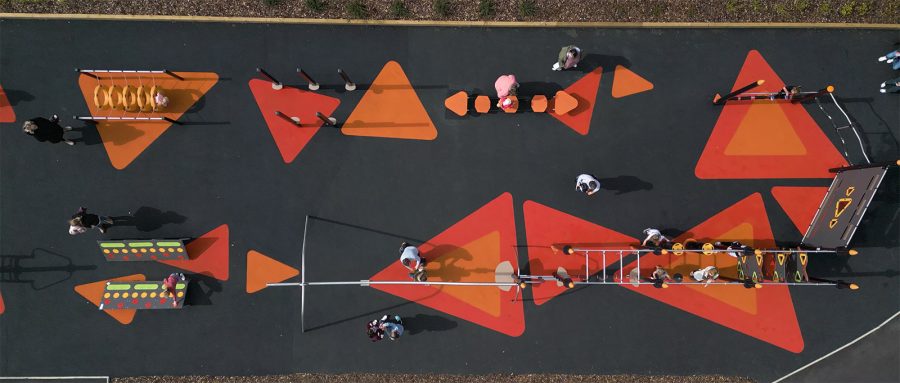
Playground Safety: When Can a Playground Be Considered Safe?
Article published on 1 October 2026
A playground must meet certain requirements relating to manufacturing, design, maintenance, management and signage in order to ensure user safety. The European standard governing playground design allows a certain degree of freedom in equipment design in order to preserve its playful and educational nature. Indeed, children need to experience controlled risks, learn to explore and...


