
Article published on 1 October 2026
A playground must meet certain requirements relating to manufacturing, design, maintenance, management and signage in order to ensure user safety.
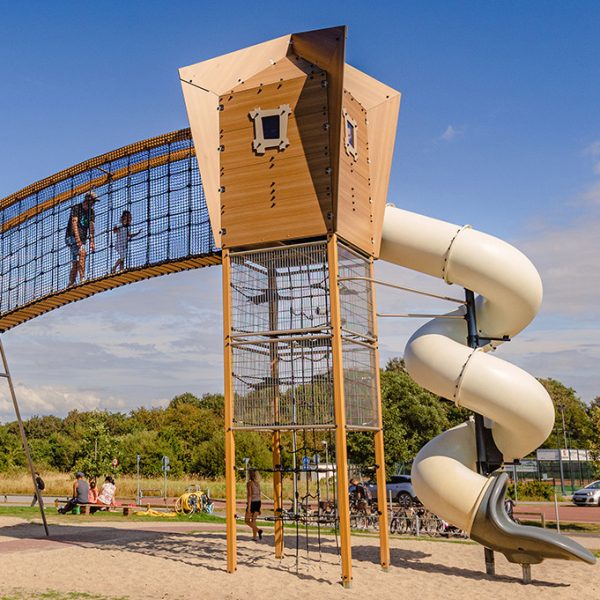
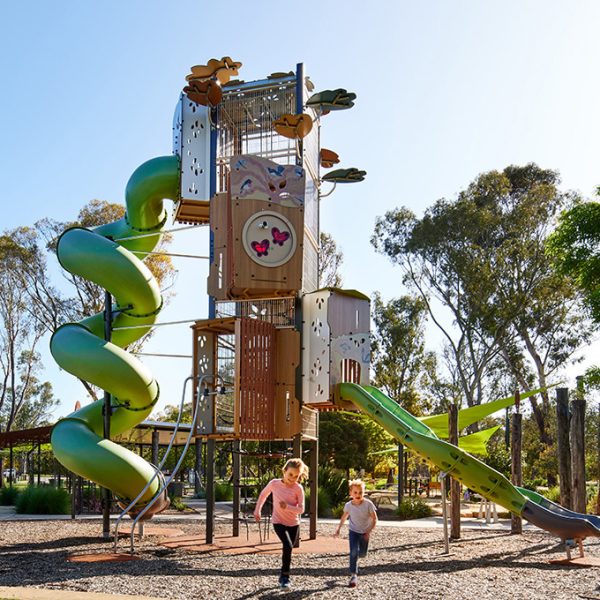
The European standard governing playground design allows a certain degree of freedom in equipment design in order to preserve its playful and educational nature.
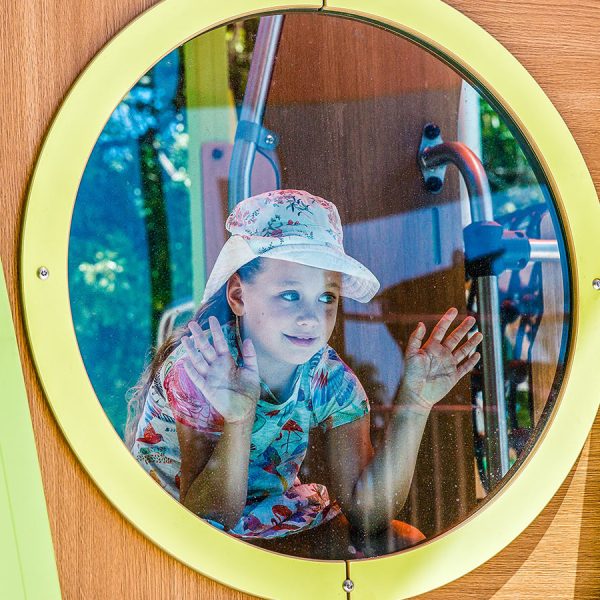
Indeed, children need to experience controlled risks, learn to explore and push their own limits as they grow.
Through play, they experiment and gradually learn to manage height and a sense of space, balance, sliding, climbing, and much more. One important piece of advice for adults accompanying young users is to respect the child’s pace and abilities.
Indeed, when an adult helps a child access a particular part of the equipment, the child may find themselves in a play area that is too difficult for their abilities.
The level of difficulty involved in accessing the equipment should therefore be appropriate to the characteristics of the play structure.
What Should You Do If One of These Characteristics Is Missing?
The playground owner or manager should be informed so that they can contact the equipment supplier and report the issue. The supplier can then assess the situation and implement the necessary corrective measures.
However, it is not possible to completely eliminate risks in a playground. These risks depend in particular on:
- the behaviour of children and the adults accompanying them;
- the equipment installed and, more broadly, the quality of the playground layout.
Contact us by completing the form to receive more information and start designing a playground with us that is safe — but above all, full of fun!
More Tips from Experts
How to Design Innovative Outlook Playgrounds
Article published on 1 October 2026
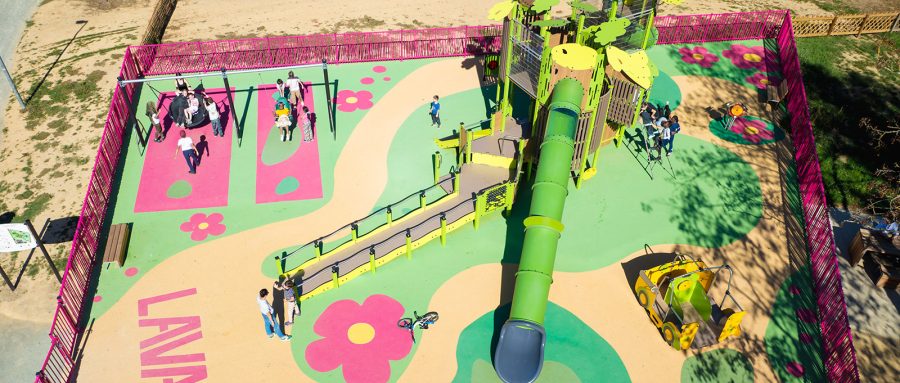
Outdoor playgrounds represent a major challenge for local authorities and designers, who must create spaces that do more than simply provide entertainment. They should also support the psychomotor development of younger users and, more broadly, benefit users of all ages. Innovation in the outdoor play sector has led to a fundamental rethink of design approaches,...
What Grants Are Available to Fund a Playground or Sports Area Project?
Article published on 1 October 2026
Funding a playground or sports area can quickly become a complex process. With a wide range of funding schemes, eligibility criteria specific to each funding organisation and deadlines to meet, it is not always easy for a local authority to identify the funding opportunities best suited to its project. Drawing on its experience working with...


