Article published on 1 October 2026

Funding a playground or sports area can quickly become a complex process. With a wide range of funding schemes, eligibility criteria specific to each funding organisation and deadlines to meet, it is not always easy for a local authority to identify the funding opportunities best suited to its project.

Drawing on its experience working with local authorities and its knowledge of the challenges involved in developing playgrounds and sports areas, Proludic has developed extensive expertise in identifying funding opportunities that may be available for these projects. Through regular monitoring and analysis, its teams identify the most relevant funding schemes based on the nature of the project, the location and the objectives being pursued.

This knowledge of available funding schemes enables Proludic to advise local authorities when looking for grants and to support them in preparing their applications, in particular by providing the technical information required to compile their funding applications.

1 – The Main Sources of Funding

Whether for a playground, a multisport pitch, an outdoor fitness area or a fitness trail, local authorities can access a wide range of funding schemes to finance all or part of their project.
Funding may be provided by various public bodies, including the European Union, the French State, decentralised government services such as Prefectures, intermunicipal authorities, Departments, Regions, Family Allowance Funds (CAF) and Water Agencies. Each organisation operates according to its own responsibilities, priorities and eligibility criteria, which explains the diversity of funding schemes available.
Funding research should begin during the earliest stages of the project. Many grants are subject to specific application deadlines and require an application to be submitted before work begins. Anticipating these steps makes it possible to identify the most appropriate funding schemes and build a consistent financing plan.

Combining Funding Sources: A Common Practice
In most cases, a playground or sports area can benefit from several sources of funding. A municipality may, for example, combine State funding, financial support from its Department, a grant from its intermunicipal authority and regional funding. Depending on the characteristics of the project, European funding, CAF support or assistance from a Water Agency may also be added to the financing plan.
This co-financing approach is now widely used. It helps reduce the financial contribution required from the local authority and, in many cases, enables it to develop a more ambitious project.

2 – Criteria That Can Support Funding Applications

Not all playgrounds or sports areas address the same public policy objectives. While each funding organisation has its own criteria, certain priorities regularly feature in calls for projects and funding schemes. The more closely a project aligns with these priorities, the more likely it is to qualify for one or more funding opportunities.

Promoting Physical Activity and Sport for All
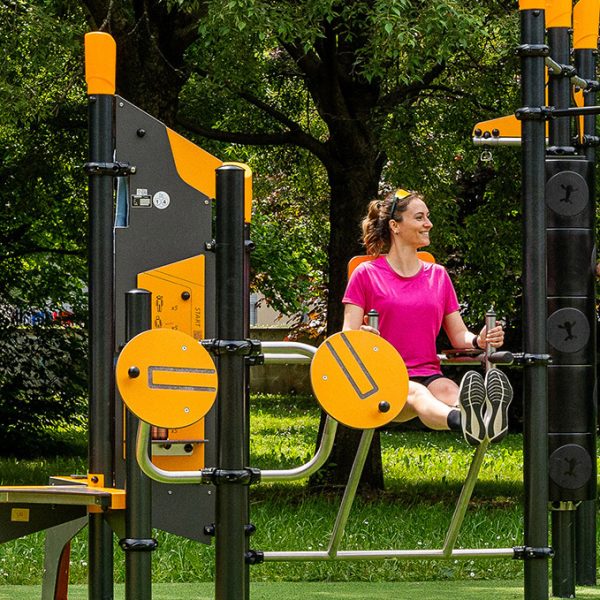
Facilities that encourage physical activity, help combat sedentary lifestyles and improve access to sport for everyone are regularly supported. Multisport pitches, outdoor fitness areas, fitness trails and facilities that encourage free and independent participation in sport all contribute to these objectives.

Developing Inclusive Spaces
Inclusion has become a key criterion for many funding schemes. Projects that enable all children, regardless of their abilities, to play together, or that provide equipment accessible to people with disabilities, are particularly valued.

Restoring Nature and Greening Public Spaces
Projects incorporating soil de-sealing, tree planting, rainwater management or the creation of urban cooling areas address environmental transition objectives. They may therefore qualify for specific funding schemes, particularly through the Green Fund or Water Agencies.

Strengthening Local Attractiveness and Social Cohesion
A playground or sports area is often much more than a simple leisure facility. It contributes to quality of life, encourages interaction between residents, revitalises neighbourhoods and town centres, and enhances the attractiveness of an area. These factors are taken into consideration by many funding organisations.

Regenerating Public Spaces
The creation of a playground is often part of a broader urban development project: renovating a public square, redeveloping a park, transforming a school playground or revitalising a neighbourhood. When integrated into a broader development strategy, the project may qualify for wider funding schemes.

Key takeaway: a project that addresses several public policy objectives may be eligible for different funding schemes. The more criteria it meets, the greater the potential for combining multiple sources of funding.

3 – Proludic’s Support

Beyond the design and delivery of playground and sports area projects, Proludic supports local authorities in identifying the funding schemes best suited to their projects, helping make them a reality.

Expertise Dedicated to Local Authorities
Proludic draws on its knowledge of development projects and the challenges faced by local authorities to continuously monitor the main funding schemes that may be available.
This knowledge enables its teams to identify funding opportunities that may match the characteristics of each project and the priorities of different funding organisations.

Advice Tailored to Each Project
Every project is unique. Proludic’s teams assess its specific characteristics and advise project owners on identifying the funding schemes best suited to their objectives, their local area and the challenges their future development aims to address.

Support in Preparing Applications
To facilitate the preparation of grant applications, Proludic provides the technical information required, including project descriptions, plans, visuals, budget estimates and other documents that may be requested by funding organisations.

Support Throughout the Project
From the initial planning stages through to the completion of the development, Proludic remains alongside local authorities, providing advice and the technical information they need at every stage of the project.

Key takeaway: by combining its expertise in development projects with in-depth knowledge of funding schemes, Proludic helps local authorities structure their projects and prepare their grant applications under the best possible conditions.
 r projet et à préparer leurs demandes de subvention dans les meilleures conditions.

Drawing on its knowledge of existing funding schemes and its expertise in playground and sports area projects, Proludic supports local authorities in identifying available funding opportunities, aligning their project with funders’ eligibility criteria and preparing their applications under the best possible conditions.

Would you like to explore funding opportunities for your future playground or sports area project? The Proludic team is available to advise and support you throughout the process. Contact us.

Contact Page
Fields marked with a * are required
When should a grant application be submitted?

Applications generally need to be prepared before work begins. Many funding schemes require that no commitment be made before the application is submitted, or even before funding has been approved. It is therefore advisable to anticipate this process from the project design stage.

What types of projects are most likely to receive funding?

Projects that promote physical activity, inclusion, environmental sustainability, the redevelopment of public spaces or social cohesion align with the priorities of many funding organisations. The more a project combines several of these objectives, the more funding opportunities may be available.

Can a small municipality apply for grants?

The size of the municipality is not the only eligibility criterion. The characteristics of the project, its value to the local community and how well it aligns with the priorities of the various funding schemes are generally key factors.

What documents are usually required for a grant application?

Funding organisations generally request a project description, a provisional funding plan, budget estimates, plans, visuals and various administrative documents. The documents required may vary depending on the funding scheme being applied for.

Can Proludic support a local authority in finding grants?

Proludic advises local authorities on identifying the funding opportunities best suited to their projects and provides them with the technical information required to prepare grant applications.

How long does it take to receive a grant?

Timeframes vary depending on the funding organisation and the schemes being applied for. They can range from a few weeks to several months. This is why it is advisable to consider funding opportunities from the earliest stages of the project.

More Tips from Experts
How to Design Innovative Outlook Playgrounds

Article published on 1 October 2026

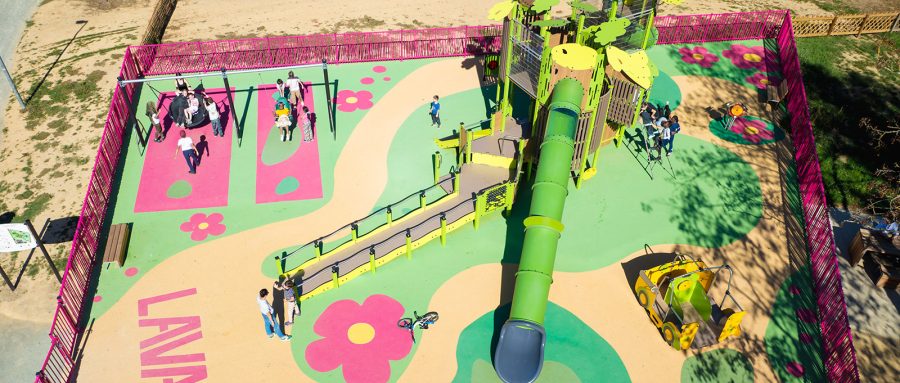
Outdoor playgrounds represent a major challenge for local authorities and designers, who must create spaces that do more than simply provide entertainment. They should also support the psychomotor development of younger users and, more broadly, benefit users of all ages. Innovation in the outdoor play sector has led to a fundamental rethink of design approaches,...
Playground Safety: When Can a Playground Be Considered Safe?

Article published on 1 October 2026

A playground must meet certain requirements relating to manufacturing, design, maintenance, management and signage in order to ensure user safety. The European standard governing playground design allows a certain degree of freedom in equipment design in order to preserve its playful and educational nature. Indeed, children need to experience controlled risks, learn to explore and...